Saint Therese of the Child Jesus
of the Holy Face
Entries by Maureen O'Riordan (558)
"The Secret of Saint Therese," a new film by Romereports about the influence of St. Therese around the world
The Secret of Saint Therese
The Secret of Therese from ROME REPORTS on Vimeo.
View the 3:34 trailer of the new film by RomeReports, "The Secret of Saint Therese." This film by Romereports which was nominated at the International Catholic Film Festival (also known as the Oscars of Catholic cinema), is described like this:
This film tells the story of St. Therese's life and message, intertwined with the personal stories of twelve people from around the world who testify to the great impact Therese has made on their lives. Including very rare footage of the inside of her monastery at Lisieux, we also meet a taxi driver in Rome, a famous radio priest in the Netherlands, a wedding dress designer in Paris, a teenager in Lebanon, a Protestant professor at Harvard divinity School, a mother of twelve children in Nigeria, a stock broker on Wall Street, and others, who share their moving personal stories of how Thérèse, and her "secret", has changed their lives. A secret so powerful, it confirms her mission to "Love Jesus and to make Him loved by others."
Rent or purchase the download of "The Secret of Therese" at Vimeo.
"The Secret of Saint Therese" is also available in DVD format from Ignatius Press, which distributes excellent books and films about St. Therese.

Purchase "The Secret of Saint Therese" as a DVD. Ordering the DVD through this link supports this Web site.
Please do not miss this chance to experience the radiance of St. Therese in our contemporary world.
 Maureen O'Riordan
in Ignatius Press, Romereports, Secret of Saint Therese, Secret of Therese, Therese of Lisieux, documentaries about St. Therese, film of Lisiieux Carmel, films about Saint Therese
|
Maureen O'Riordan
in Ignatius Press, Romereports, Secret of Saint Therese, Secret of Therese, Therese of Lisieux, documentaries about St. Therese, film of Lisiieux Carmel, films about Saint Therese
|
 Post a Comment
|
Post a Comment
|  Email
|
Email
|  Print
Print
"The Mother of Mercies - Day Nine of Nine Days of Prayer and Reflection before the Feast of St. Therese during the Jubilee of Mercy - Friday, September 30, 2016
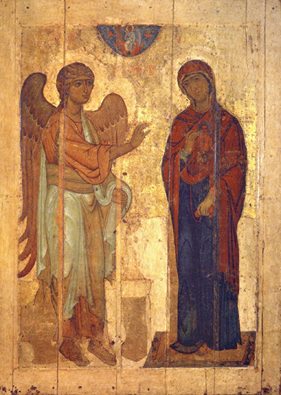
In this ninth and last day of the days of prayer before Therese's feast, although I include a few lines from Therese, it is hardly necessary to quote her directly because the Holy Father's words express so well what she knew in her heart and experienced in her life. I recommend that you pray over paragraphs 23, 24, and 25 of Misericordiae Vultus to prepare to celebrate the feast of St. Therese, Missionary of Mercy.
The Mother of Mercies
Toward the end of Misericordiae Vultus, Pope Francis writes:
My thoughts now turn to the Mother of Mercy.
(“The Mother of Mercy” evokes Zelie Martin’s words to Pauline when the family was praying for Zelie’s cure from breast cancer: “Pray trustingly to the Mother of mercies. She will come to our aid with the goodness and sweetness of the most tender of mothers.”).
May the sweetness of her countenance watch over us in this Holy Year, so that all of us may rediscover the joy of God’s tenderness. No one has penetrated the profound mystery of the incarnation like Mary. Her entire life was patterned after the presence of mercy made flesh. The Mother of the Crucified and Risen One has entered the sanctuary of divine mercy because she participated intimately in the mystery of His love.
Compare this with the bold words of Therese:
You love us, Mary, as Jesus loves us . . . .
The Savior knew your immense tenderness.
He knew the secrets of your maternal heart.
Pope Francis continues:
Chosen to be the Mother of the Son of God, Mary, from the outset, was prepared by the love of God to be the Ark of the Covenant between God and man. She treasured divine mercy in her heart in perfect harmony with her Son Jesus. Her hymn of praise, sung at the threshold of the home of Elizabeth, was dedicated to the mercy of God which extends from “generation to generation” (Lk 1:50). We too were included in those prophetic words of the Virgin Mary. This will be a source of comfort and strength to us as we cross the threshold of the Holy Year to experience the fruits of divine mercy.
At the foot of the Cross, Mary, together with John, the disciple of love, witnessed the words of forgiveness spoken by Jesus. This supreme expression of mercy towards those who crucified him show us the point to which the mercy of God can reach. Mary attests that the mercy of the Son of God knows no bounds and extends to everyone, without exception.
Compare these last lines with Therese:
Refuge of sinners, He leaves us to you
When He leaves the Cross to wait for us in Heaven.
The Pope continues:
Let us address her in the words of the Salve Regina, a prayer ever ancient and ever new, so that she may never tire of turning her merciful eyes upon us, and make us worthy to contemplate the face of mercy, her Son Jesus.
Make this prayer ("Hail, Holy Queen, Mother of Mercy" by listening to the chant below:
Time of Prayer
Choose any of the passages above or from paragraphs 23, 24, or 25 of Misericordiae Vultus and pray over them.
Let's conclude the nine days of prayer to prepare for Therese's feast during the Jubilee of Mercy with the Pope's words:
I present, therefore, this Extraordinary Jubilee Year dedicated to living out in our daily lives the mercy which the Father constantly extends to all of us. . . . . From the heart of the Trinity, from the depths of the mystery of God, the great river of mercy wells up and overflows unceasingly. It is a spring that will never run dry, no matter how many people draw from it. Every time someone is in need, he or she can approach it, because the mercy of God never ends. The profundity of the mystery surrounding it is as inexhaustible as the richness which springs up from it.
Just before offering the Prayer of Pope Francis below, pray with him for the Church in these last words from Misericordiae Vultus:
In this Jubilee Year, may the Church echo the word of God that resounds strong and clear as a message and a sign of pardon, strength, aid, and love. May she never tire of extending mercy, and be ever patient in offering compassion and comfort. May the Church become the voice of every man and woman, and repeat confidently without end: “Be mindful of your mercy, O Lord, and your steadfast love, for they have been from of old” (Ps 25:6)..
The Prayer of Pope Francis for the Jubilee
Click here to read the Prayer of Pope Francis.
Thank you for making these nine days of prayer. May God bless you through them.
Maureen O'Riordan
in Extraordinary Jubilee of Mercy, Mother of Mercies, Pope Francis, St. Therese of Lisieux
|
Post a Comment
| Email
| Print
The Jubilee Indulgence and the Communion of Saints - Day Eight of the Nine Days of Prayer and Reflection before the feast of St. Therese of Lisieux during the Jubilee of Mercy - Thursday, September 29, 2016
 Icon of "The Communion of Saints," by Brother Mickey McGrath, O.S.F.S.
Background
About the Jubilee of Mercy, Pope Francis has not been in jest. By many concrete actions he is showing his commitment to all people experiencing mercy. He is broadly expanding the indulgences traditionally available to Catholics, extending them to those in prison and to anyone who performs one of the spiritual or corporal works of mercy. The indulgence will continue to be granted to able-bodied Catholics who fulfill certain conditions and to the sick, and the faithful can obtain indulgences for the dead. The Pope is also granting to all priests around the world authority to absolve women who confess to having received an abortion and is permitting priests of the Society of St. Pius X, which is separated from the Catholic Church, to grant absolution to those who confess to these priests. Read a story about the announcement, and see details about the various ways to fulfill the conditions for the Jubilee indulgence.
Indulgences
“Indulgences” are one of the most misunderstood practices of the Catholic Church. Some people have commented that the Church’s granting of indulgences takes away from the complete expiation of our sins by Jesus Christ. I understand that indulgences are a dispensing in space and time of this treasure to individual souls through the ministry of the Church. When I was a child, partial indulgences were presented as “time off in Purgatory.” As an adult, as I go more deeply into the teaching of St. Therese on life after death, and as I discover that God’s mercy cannot be restrained from pouring itself out on everyone, whether or not they have fulfilled the conditions for indulgences, I have not found it easy to relate personally to the concept of indulgences. Without fully understanding them, I was grateful to seek to fulfill the conditions for the plenary indulgence offered to those who attended the canonization of Sts. Louis and Zelie Martin, and I had the joy of receiving the Sacrament of Reconciliation in the Basilica of St. Mary Major while the relics of St. Therese and of Sts. Louis and Zelie were exposed so that we might pray in their presence for the Synod on the Family. I still did not understand exactly what an indulgence might mean to the future of the individual penitent. Since my return, Pope Francis’s words in Misericordiae Vultus have helped me immeasurably to see that seeking a plenary indulgence does not conflict with Therese’s bold confidence in God’s mercy.
St. Therese’s Attitude toward Purgatory
St. Therese adhered to the teaching of the Church about purification after death and often prayed and obtained indulgences for “the souls in purgatory.” Indeed, she is reported to have said “After my death, if you want to please me, offer up the Stations of the Cross for my intentions. If I don’t need them, I’ll be delighted to make a present of them to the souls in Purgatory.” But, deep as was her love for those already undergoing this painful purgation, in the matter of “going to purgatory,” Therese believed that, if we trust enough in God’s mercy, God will receive us at the moment we die. She was wholeheartedly concerned for the fate of others, but she kept no merits for herself, asking that they all be applied to others and that she might appear before God “with empty hands.” She believed that a single glance from God could purify her. She writes the seminarian Maurice Belliere:
“I dare to hope ‘my exile will be short,’ but this is not because I am prepared. I feel that I shall never be prepared if the Lord does not see fit to transform me Himself. He can do so in one instant. After all the graces He has showered upon me, I still await this one from His infinite mercy.”
in her “Offering of myself as a victim of Holocaust to God’s Merciful Love” she boldly says
“If through weakness I sometimes fall, may Your divine glance cleanse my soul immediately, consuming all my imperfections like the fire that transforms everything into itself.”
She ends “May my soul take its flight without any delay into the eternal embrace of Your Merciful Love.” To Fr. Roulland: “How would He purify in the flames of purgatory souls consumed in the fire of divine love?”
[Read more in the considerable excerpt from Hubert van Dijk’s article “The Teaching of St. Therese on Purgatory” presented in “For Heaven’s Sake,” the newsletter of the Holy Souls Sodality, Vol. 3, No. 12, September 2012. In the story of Sister Febronie, we see how ardently Therese believed that an individual soul can avoid purgatory by trusting in God's mercy].
Pope Francis’s reflection on the Jubilee Indulgence
In paragraph 22 of Misericordiae Vultus, Pope Francis reflects on the indulgences available in the Jubilee Year. He states bluntly: “God’s forgiveness knows no bounds," and adds:
In the death and resurrection of Jesus Christ, God makes even more evident his love and its power to destroy all human sin. . . . yet sin leaves a negative effect on the way we think and act. But the mercy of God is stronger even than this. It becomes indulgence on the part of the Father who, through the Bride of Christ, his Church, reaches the pardoned sinner and frees him from every residue left by the consequences of sin, enabling him to act with charity, to grow in love rather than to fall back into sin.
Thus, the effect of the Jubilee indulgence is not to shorten some postponed punishment but to free us, while we are still living on earth, from the consequences of sin: from how our past sins affect our souls and personalities, and to strengthen us “to grow in love:” to fulfill the work of Christ the Redeemer. What a liberating reality!
The Pope goes on to say that the receiving of an indulgence is not a private matter:
The Church lives within the communion of the saints. In the Eucharist, this communion, which is a gift from God, becomes a spiritual union binding us to the saints and blessed ones whose number is beyond counting (cf. Rev 7:4). Their holiness comes to the aid of our weakness in a way that enables the Church, with her maternal prayers and her way of life, to fortify the weakness of some with the strength of others. Hence, to live the indulgence of the Holy Year means to approach the Father’s mercy with the certainty that his forgiveness extends to the entire life of the believer. To gain an indulgence is to experience the holiness of the Church, who bestows upon all the fruits of Christ’s redemption, so that God’s love and forgiveness may extend everywhere. Let us live this Jubilee intensely, begging the Father to forgive our sins and to bathe us in his merciful “indulgence.” [my emphasis]
St. Therese and the Communion of Saints
As her writings show, Therese lived intensely in the presence of the Communion of Saints. When Maurice Belliere was worried that she would no longer love him after she died, she wrote lines that echo the Pope’s words about holiness coming to the aid of weakness:
I have to tell you, little brother, that we don’t understand Heaven in the same way. You think that, once I share in the justice and holiness of God, I won’t be able to excuse your faults as I did when I was on earth. Are you then forgetting that I shall also share in the infinite mercy of the Lord? I believe that the Blessed in Heaven have great compassion for our miseries. They remember that when they were weak and mortal like us, they committed the same faults themselves and went through the same struggles, and their fraternal tenderness becomes still greater than it ever was on earth. It’s on account of this that they never stop watching over us and praying for us.
Maurice and Therese: The Story of a Love, by Bishop Patrick Ahern. (Garden City, New York; Doubleday Image Books, 2001).
Time of Personal Prayer
Pray as the Holy Spirit leads you. Choose one of the paragraphs quoted from St. Therese or from Pope Francis and pray over it, pausing whenever your heart feels moved.
The Prayer of Pope Francis for the Jubilee
Maureen O'Riordan
|
Post a Comment
| Email
| Print
"God's justice is his mercy" - Day Seven of the Nine Days of Prayer and Reflection before the feast of St. Therese during the Jubilee of Mercy - Wednesday, September 28, 2016
 "Resplendent with love." Courtesy of l'instantane Normandie
In Misericordiae Vultus, Pope Francis writes that justice and mercy “are not two contradictory realities, but two dimensions of a single reality that unfolds progressively until it culminates in the fullness of love. . . ."
For a full understanding of the Pope's thought, I urge you to read this whole section, paragraphs 20 and 21. He continues:
Faced with a vision of justice as the mere observance of the law that judges people simply by dividing them into two groups – the just and sinners – Jesus is bent on revealing the great gift of mercy that searches out sinners and offers them pardon and salvation. . . . Jesus . . . goes beyond the law; the company he keeps with those the law considers sinners makes us realize the depth of his mercy.
[St. Paul realizes that] salvation comes not through the observance of the law, but through faith in Jesus Christ, who in his death and resurrection brings salvation together with a mercy that justifies. God’s justice now becomes the liberating force for those oppressed by slavery to sin and its consequences. God’s justice is his mercy (cf. Ps 51:11-16) . . . .
Mercy is not opposed to justice but rather expresses God’s way of reaching out to the sinner, offering him a new chance to look at himself, convert, and believe. Saint Augustine . . . says: “It is easier for God to hold back anger than mercy”.[13] And so it is. God’s anger lasts but a moment, his mercy forever.
. . . God does not deny justice. He rather envelops it and surpasses it with an even greater event in which we experience love as the foundation of true justice. . . . God’s justice is his mercy given to everyone as a grace that flows from the death and resurrection of Jesus Christ.”
Compare the Pope’s words with these two paragraphs from St. Therese:
Writing in January 1896, within a week or two of her twenty-third birthday:
“His Justice seems to me clothed in love.”
O my dear Mother! after so many graces can I not sing with the Psalmist: “How GOOD is the Lord, his MERCY endures forever!” It seems to me that if all creatures had received the same graces I received, God would be feared by none but would be loved to the point of folly; and through love, not through fear, no one would ever consent to cause Him any pain. I understand, however, that all souls cannot be the same, that it is necessary there be different types in order to honor each of God’s perfections in a particular way. To me He has granted His infinite Mercy, and through it I contemplate and adore the other divine perfections! All of these perfections appear to be resplendent with love; even His Justice (and perhaps this even more so than the others) seems to me clothed in love. What a sweet joy it is to think that God is Just, i.e., that He takes into account our weakness, that He is perfectly aware of our fragile nature. What should I fear then? Ah! must not the infinitely just God, who deigns to pardon the faults of the prodigal son with so much kindness, be just also toward me who “am with Him always”?
Story of a Soul, tr. John Clarke, O.C.D. Washington, D.C.: Washington Province of Discalced Carmelites, 1976.
How significant it is that Therese wrote these words immediately before she tells about her “Offering of myself as a victim of Holocaust to God’s Merciful Love.”
“I expect as much from God’s justice as from His mercy.”
Sixteen months later, in May 1897, writing to her priest-brother, Fr. Adolphe Roulland, who, as a missionary in China, was exposed to the possibility of sudden death and wondered if he would go to Purgatory:
I do not understand, Brother, how you seem to doubt your immediate entrance into heaven if the infidels were to take your life. I know one must be very pure to appear before the God of all Holiness, but I know, too, that the Lord is infinitely just; and it is this justice which frightens so many souls that is the object of my joy and confidence. To be just is not only to exercise severity in order to punish the guilty; it is also to recognize right intentions and to reward virtue. I expect as much from God's justice as from His mercy. It is because He is just that "He is compassionate and filled with gentleness, slow to punish, and abundant in mercy, for He knows our frailty, He remembers we are only dust. As a father has tenderness for his children, so the Lord has compassion on us!! Oh, Brother, when hearing these beautiful and consoling words of the Prophet-King, how can we doubt that God will open the doors of His kingdom to His children . . . “
Letters of St. Therese of Lisieux, Vol. II: 1890-1897. Washington, D.C.: Washington Province of Discalced Carmelites, 1988, p. 1093.
Time of Personal Prayer
Pray as the Holy Spirit leads you. Choose one of the paragraphs above and pray over it, pausing whenever your heart feels moved.
The Prayer of Pope Francis for the Jubilee
Maureen O'Riordan
|
Post a Comment
| Email
| Print
"Jesus wants to open the door of his heart" - Day Six of Nine Days of Prayer and Reflection before the feast of St. Therese of Lisieux during the Jubilee of Mercy - Tuesday, September 27, 2016
 The "Crucifix of Mercy" that Henri Pranzini kissed on the scaffold
In Misericordiae Vultus, Pope Francis mades it clear that he did not envision the Jubilee Year of Mercy as a frill for the righteous, but as an invitation to concrete personal and social conversion, an invitation especially for those engaged in evil deeds. He appealed especially to members of organized crime:
May the message of mercy reach everyone, and may no one be indifferent to the call to experience mercy. I direct this invitation to conversion even more fervently to those whose behaviour distances them from the grace of God. I particularly have in mind men and women belonging to criminal organizations of any kind. For their own good, I beg them to change their lives. I ask them this in the name of the Son of God who, though rejecting sin, never rejected the sinner.
He urges persons who have committed serious crimes to return to the merciful embrace of the Father and of the Christian community. He also invites
. . . . those who either perpetrate or participate in corruption. This festering wound is a grave sin that cries out to heaven for vengeance, because it threatens the very foundations of personal and social life. Corruption prevents us from looking to the future with hope, because its tyrannical greed shatters the plans of the weak and tramples upon the poorest of the poor. . . . If we want to drive it out from personal and social life, we need prudence, vigilance, loyalty, transparency, together with the courage to denounce any wrongdoing. If it is not combated openly, sooner or later everyone will become an accomplice to it, and it will end up destroying our very existence.
Especially in the face of these grave sins, Pope Francis urges us to turn to Mercy during the jubilee year:
This is the opportune moment to change our lives! This is the time to allow our hearts to be touched! When faced with evil deeds, even in the face of serious crimes, it is the time to listen to the cry of innocent people who are deprived of their property, their dignity, their feelings, and even their very lives. To stick to the way of evil will only leave one deluded and sad. True life is something entirely different. God never tires of reaching out to us. He is always ready to listen, as I am too, along with my brother bishops and priests. All one needs to do is to accept the invitation to conversion and submit oneself to justice during this special time of mercy offered by the Church.
Clearly the Pope’s insistence on the availability of God’s mercy is grounded in a keen sense of the concrete reality of sin and its consequences. Let’s pray that, as each of us casts ourselves into the loving arms of God, the balance between good and evil will shift so that many who have committed serious crimes will turn to God with the confidence that God’s tender mercy deserves and wants to create in us. May the Church be a concrete sign of that mercy, and may we welcome God's returning children.
St. Therese and the Conversion of Criminals
 The Cathedral of St. Pierre in Lisieux
In July 1887, when Therese was fourteen, she experienced her vocation to participate in the Passion of Christ for the sake of others. One Sunday in July, after Mass at St. Pierre's Cathedral, while she was closing her missal, Therese saw a holy card of the Crucified protrude from the edge of the book in such a way that only one hand of the Savior was visible.
 Crucifix at St. Pierre's Cathedral, Lisieux

I was struck by the blood flowing from one of the divine hands. I felt a great pang of sorrow when thinking this blood was falling to the ground without anyone's hastening to gather it up. I was resolved to remain in spirit at the foot of the Cross and to gather up this divine dew. I understood I was then to pour it out on souls. The cry of Jesus on the Cross sounded continually in my heart: “I thirst!” These words ignited within me an unknown and very living fire. I wanted to give my Beloved to drink, and I felt myself consumed with a thirst for souls. As yet, it was not the souls of priests that attracted me, but those of great sinners. I burned with the desire to snatch them from the eternal flames.”
That summer France was gripped with the story of Henri Pranzini, who had been convicted of murdering two women and a little girl in Paris. He had been condemned to die at the guillotine, and the press reported that he was impenitent and had refused to see the chaplain. Therese begged God to allow him to repent and to give her a sign of his repentance. Enlisting the partnership of her sister Celine, she prayed, offered sacrifices, and had a Mass offered for this intention. She was heard to the letter: on the scaffold Pranzini suddenly turned and cried out “Chaplain, hand me that crucifix!” Fr. Faure stretched out the crucifix, and Pranzini kissed the Savior’s wounds several times. Therese was deeply touched by this “unspeakably sweet response” to her prayer. Read Therese’s account of her prayer for Pranzini and her response to his repentance at the Web site of the archives of the Carmel of Lisieux.
Therese’s own attitude to God shows how deeply she entered into solidarity with the greatest sinners. The last lines of her memoir attest to this attitude:
“Yes, I feel it: even if I had on my conscience all the sins one could commit, I would go, my heart broken with sorrow, and throw myself into Jesus’ arms. I know how much he loves the prodigal child who returns to Him. It is not because God, in His anticipating mercy, has preserved my soul from mortal sin that I go to Him with confidence and love.”
Speaking of the Year of Mercy, Pope Francis said recently: "I believe this is the time for mercy. We are all sinners, we all carry burdens within us. I felt Jesus wants to open the door of his heart.” He added that the opening of the Holy Doors in Rome and all over the world will be a symbol of how Jesus is opening the door of his heart.
Question:
How can you enter into prayerful solidarity with those who are guilty of the most serious crimes?
Does Therese's prayer for Pranzini lead you to pray for terrorists, for those who persecute and kill innocent persons?
How can you participate in the saving mission of Jesus to them?
Time of Personal Prayer
Pray as the Holy Spirit leads you. Options:
- Pray over the lines from St. Therese above, and pause whenever your heart feels moved. Or:
- Choose one of these lines from the gospel as a prayer starter:
“The Son of Man came to seek out and save what was lost.” (Luke 19:10)
“I did not come to call the virtuous, but sinners to newness of life.” (Luke 5:32) Or:
- Imagine Jesus opening the door of his heart to you. Imagine that you enter it. Let yourself be loved. Now imagine persons who have been guilty of greater sins than you have also entering the heart of Jesus. See yourself surrounded by these other sinners. Feel yourselves surrounded by the love and mercy of the divine heart. Notice what happens to you and to them in the crucible of that Heart burning with love.
Please pray that on the feast of Saint Therese during the Jubilee of Mercy all of us, and especially “those whose behavior distances them from the grace of God” may turn to God, know ourselves as loved, and accept God’s mercy and healing.
The Prayer of Pope Francis for the Jubilee
Click here to read the Prayer of Pope Francis.
Maureen O'Riordan
|
Post a Comment
|
 1 Reference
| Email
| Print
1 Reference
| Email
| Print